
Introduction
AI Chatbots Improve Customer Support in ways that businesses could only dream of a few years ago. They provide instant answers, handle multiple queries at the same time, and work around the clock without taking a break. This means your customers get the help they need immediately, whether it’s checking an order, solving a problem, or finding product information. For businesses, this not only increases customer satisfaction but also saves time and reduces support costs.

Beyond just answering questions, AI chatbots can personalize interactions, recommend products, and collect valuable feedback. They learn from every conversation to improve responses, making each interaction smarter than the last. In this article, we’ll explore exactly how AI chatbots improve customer support and show you real-world examples of businesses using them to delight customers and grow faster.
What Are AI Chatbots?
AI chatbots are intelligent software tools designed to interact with customers through text or voice. Unlike traditional rule-based chat systems, which can only follow fixed scripts, AI chatbots understand the context of conversations and respond in a way that feels natural and human-like. They can learn from previous interactions, provide personalized responses, and even escalate complex issues to human agents when necessary.
These AI customer service tools help businesses automate repetitive tasks, such as answering frequently asked questions, sharing product information, tracking orders, and scheduling appointments. By integrating AI chatbots into your support workflow, companies can improve customer experience, reduce response times, and free human agents to focus on more complex queries. Modern AI chatbots also gather valuable insights from customer interactions, helping businesses make data-driven decisions and enhance overall service quality.
Key Features of AI Chatbots:
AI chatbots are transforming the way businesses interact with customers. They are no longer just tools for answering simple questions. Today, chatbots can provide personalized experiences, collect valuable data, and even help drive sales. Some of the key features that make AI chatbots so powerful include 24/7 availability, instant responses, natural language understanding, multi-channel support, automated data collection, and seamless integration with business systems.
24/7 availability means your customers can get help any time of the day or night. Whether it is midnight or a holiday, the chatbot is always ready to answer questions. Real-time responses ensure that customers don’t have to wait for hours or even minutes to get help. With natural language understanding, chatbots can actually understand what the customer is asking, even if the question is phrased in an unusual way. Multi-channel support allows businesses to provide consistent service across websites, social media, and messaging apps. Automated data collection captures every interaction and provides insights that can improve products, services, and marketing strategies. Finally, integration with other systems, like CRMs and payment gateways, ensures a smooth customer journey from start to finish.
Benefits of AI Chatbots in Customer Support
AI chatbots offer many advantages for businesses of all sizes. They not only improve customer experience but also save time, reduce costs, and help businesses scale easily. Here are some of the most important benefits.
1. Customers Can Get Help Anytime
Customers today expect instant support, no matter the time or day. AI chatbots ensure that someone is always available to answer questions. This is especially important for businesses with international customers in different time zones. For example, an e-commerce store can allow customers to check the status of their orders, request a return, or find product information at any time without human help.
To make this even more effective, businesses can set up chatbots to escalate complicated questions to human agents. This way, customers always get the help they need while the AI handles simple or common questions automatically.
2. Instant Answers Reduce Frustration
Long waiting times frustrate customers and can drive them to competitors. AI chatbots provide instant answers to common queries, which significantly improves customer satisfaction. For example, if a customer wants to know the delivery date of an order, a chatbot can give that answer immediately instead of making the customer wait on hold.
Research shows that businesses using AI chatbots can reduce response time by up to 70 percent. Faster responses make customers feel valued and increase the chances that they will return for future purchases.
3. Businesses Save Money
Hiring and training a large customer support team can be very expensive. AI chatbots can handle repetitive tasks, freeing up human agents to focus on more complex issues. For instance, a mid-sized company can automate up to 75 percent of routine inquiries, saving thousands of dollars on salaries, training, and operational costs.
A smart strategy is to use chatbots to gather information from customers before passing the query to a human agent. This reduces the time needed to solve problems and ensures that human agents can focus on high-priority tasks.
4. Consistent and Accurate Information
Human agents can make mistakes or give inconsistent answers depending on their knowledge or mood. AI chatbots, however, provide consistent and accurate information every time. This builds trust with customers because they know they can rely on the chatbot for correct answers.
For example, a banking chatbot can always provide the latest interest rates, account balances, or loan details without error. Businesses can also update their chatbot’s knowledge base regularly to ensure accuracy as products, services, or policies change.
5. Easily Handle Large Volumes of Queries
During busy periods such as holidays, promotions, or product launches, customer queries can increase dramatically. AI chatbots can handle hundreds or even thousands of simultaneous requests without slowing down. This ensures that no customer has to wait and reduces the pressure on human support teams.
To make this even more efficient, chatbots can prioritize urgent queries, such as issues with payments or deliveries, while handling simpler questions at the same time.
6. Personalized Customer Experience
Modern AI chatbots can analyze customer behavior, past purchases, and interaction history to provide personalized recommendations. This creates a more engaging experience and encourages repeat purchases. For example, an online retailer chatbot can suggest products based on what a customer has bought or browsed before.
Personalization also helps with upselling and cross-selling. A customer who receives a recommendation for a product that fits their needs is more likely to make a purchase. Integrating chatbots with analytics tools can help businesses track patterns and refine recommendations over time.
7. Actionable Insights from Conversations
Every interaction with a chatbot provides valuable data. Businesses can analyze chatbot conversations to understand common problems, identify areas for improvement, and even develop new products. For example, if multiple customers ask about a feature in a software product, the company can improve that feature or create better instructions to reduce confusion.
Regularly reviewing chatbot logs allows businesses to make data-driven decisions that improve overall customer experience and reduce the workload of support teams.
8. Engage Customers in a Natural Way
AI chatbots are not just for answering questions. They can guide users through processes, provide tutorials, run surveys, and even entertain in some cases. For example, a travel website chatbot can recommend travel itineraries, suggest hotels, and provide weather updates, all in a single conversation. This keeps users engaged while collecting valuable feedback.
By designing conversations that feel natural and interactive, businesses can improve customer satisfaction and increase the likelihood of conversions.
9. Continuous Improvement with AI Learning
The best AI chatbots learn over time. They analyze interactions, identify gaps in knowledge, and improve responses automatically. This means the chatbot becomes more effective and accurate with each conversation. Businesses that regularly monitor performance and train the AI see higher satisfaction rates and fewer unresolved queries.
10. Boost Sales and Customer Loyalty
AI chatbots are not just about support—they can also drive revenue. By recommending products, sending personalized promotions, and assisting with purchases, chatbots can increase sales. Satisfied customers are more likely to return, boosting long-term loyalty.
For example, a chatbot on a fashion website can suggest matching accessories when a customer buys a dress, or notify a customer when a product they viewed is on sale. These small interactions can make a big difference in customer retention.
Real-World Use Cases of AI Chatbots
AI chatbots are no longer futuristic tools—they are actively transforming businesses across industries. From e-commerce to healthcare, travel to banking, chatbots are helping companies save time, reduce costs, and deliver better customer experiences. Here are some real-world use cases that show exactly how they are applied:
1. E-Commerce: Boosting Sales and Customer Support
Online stores use AI chatbots to provide instant support and increase sales. Chatbots can help customers find products, check availability, track orders, and even suggest complementary items.
Example: A fashion retailer uses a chatbot to recommend accessories that match a customer’s selected outfit, offer personalized discounts, and guide them through checkout. This not only improves the shopping experience but also increases average order value and customer satisfaction.
Pro Tip: Integrate chatbots with your inventory system so they can provide real-time stock updates and prevent customer frustration from unavailable items.
2. Banking and Finance: Fast, Secure, and Reliable Support
Banks and financial institutions use chatbots to handle account queries, provide loan information, and guide customers through online transactions. Chatbots are especially useful for providing 24/7 support while maintaining high security standards.
Example: A banking chatbot can instantly provide account balances, transaction history, or current interest rates, while also helping customers set up bill payments or transfer funds securely.
Pro Tip: Combine chatbots with authentication measures like OTP verification to ensure secure interactions while maintaining convenience.
3. Healthcare: Personalized Guidance and Scheduling
Healthcare providers leverage AI chatbots to improve patient engagement and streamline administrative tasks. Chatbots can provide preliminary guidance, schedule appointments, send reminders, and even answer common health questions.
Example: A clinic uses a chatbot to help patients book appointments, remind them of upcoming visits, and provide instructions before procedures. This reduces no-shows and frees up staff to focus on patient care.
Pro Tip: Ensure chatbots comply with healthcare privacy regulations (like HIPAA) when handling sensitive patient information.
4. Travel and Hospitality: Enhancing Customer Experience
Travel companies and hotels use chatbots to provide instant travel information, book tickets or rooms, and suggest personalized itineraries. Chatbots make planning trips easier and more interactive.
Example: A hotel chatbot can check room availability, provide local recommendations, and handle bookings. A travel agency chatbot can suggest flight options, hotels, and tour packages based on past preferences or travel history.
Pro Tip: Use chatbots to collect feedback after travel or stays. This helps improve service and creates repeat customers.
5. Education and E-Learning: Supporting Students Anytime
Educational institutions and online learning platforms use chatbots to assist students with course information, assignment deadlines, and study resources. AI chatbots can answer questions instantly and guide students through learning platforms.
Example: An online learning platform chatbot can remind students of upcoming lessons, recommend resources based on their progress, and even provide practice quizzes.
Pro Tip: Integrate chatbots with learning management systems (LMS) to provide real-time support and track student engagement.
6. Customer Feedback and Surveys: Understanding Your Audience
Businesses can use chatbots to collect feedback, run surveys, and gather insights about customer preferences. This helps companies make informed decisions and improve products or services.
Example: A restaurant chatbot asks customers about their dining experience and provides instant coupons or rewards for feedback. This creates engagement while generating valuable data for the business.
Pro Tip: Keep surveys short and conversational to ensure higher response rates.
7. Human Resources and Internal Support: Streamlining Operations
AI chatbots are also transforming internal business operations. HR departments use chatbots to answer employee questions about leave policies, payroll, and benefits. They can also assist in onboarding new employees.
Example: A company chatbot guides new hires through the onboarding process, explains company policies, and schedules training sessions. This reduces HR workload and ensures employees have quick access to information.
Pro Tip: Integrate chatbots with internal databases to provide accurate and up-to-date information to employees.
8. Retail and Customer Loyalty: Driving Engagement
Retail stores use chatbots to engage customers beyond the purchase. They can recommend products, notify users of special offers, and provide loyalty rewards.
Example: A grocery store chatbot suggests weekly shopping lists based on customer buying habits, notifies them of discounts, and allows them to place orders for pickup or delivery.
Pro Tip: Personalization is key—use customer data to make interactions relevant and valuable.
AI chatbots are versatile tools that can improve efficiency, increase engagement, and boost revenue across multiple industries. From answering queries instantly to driving personalized experiences, the possibilities are endless. Businesses that leverage AI chatbots effectively gain a significant advantage in customer satisfaction, operational efficiency, and data-driven insights.
How AI Chatbots Improve Workflow
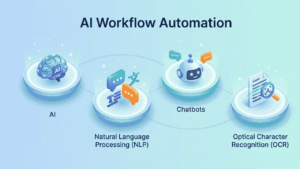
AI chatbots do more than answer questions—they streamline customer service and optimize business workflows. By automating repetitive tasks and handling initial interactions, AI chatbots allow human agents to focus on complex issues, improving overall efficiency and customer satisfaction. Here’s how they transform the customer support workflow:
1. Initial Query Handling
AI chatbots respond instantly to common questions and gather essential customer information. This includes details like order numbers, account information, or service preferences. By handling these basic inquiries automatically, businesses can reduce response times and ensure that every customer receives immediate attention.
2. Query Categorization
Once a customer query is received, AI chatbots analyze the message to determine its nature and urgency. Whether it’s a simple FAQ, a product inquiry, or a complaint, the chatbot categorizes it accurately. This automated workflow ensures that issues are prioritized correctly, reducing bottlenecks in customer support.
3. Escalation to Human Agents
For complex, sensitive, or high-priority issues, AI chatbots seamlessly escalate the query to a human agent. The chatbot passes along all collected information and conversation history, giving agents full context. This smooth handoff prevents customers from repeating themselves and ensures faster, more effective resolutions.
4. Follow-Up Automation
AI chatbots can also handle post-interaction tasks automatically. They can send order confirmations, delivery updates, reminders, and satisfaction surveys. This ensures that customers stay informed and engaged even after the initial conversation.
Example Workflow in Action
Imagine a customer asks about the status of a delivery. The AI chatbot instantly retrieves the order details and provides real-time updates. If the customer reports a problem with their order, the chatbot escalates the issue to a human agent, passing along the full conversation and all relevant data. This end-to-end automation improves efficiency, reduces errors, and enhances the overall customer experience.
By integrating AI chatbots into your customer support workflow, businesses can boost efficiency, handle high volumes of inquiries, and deliver faster, more personalized service. Automated workflows powered by AI not only save time but also create a seamless experience that keeps customers happy and loyal.
Best Practices for Implementing AI Chatbots
- Define Clear Objectives: Decide the tasks your chatbot will handle.
- Train with Quality Data: Provide FAQs, product information, and scripts to improve accuracy.
- Maintain Human Backup: Always provide an option to escalate to human support.
- Monitor and Update: Continuously analyze chatbot performance and update knowledge base.
- Integrate With CRM: Synchronize chatbot data with customer databases for personalized support.
Future of AI Chatbots in Customer Support
The future of AI chatbots is transforming the way businesses interact with customers, moving far beyond simple question-and-answer systems. Next-generation AI chatbots will be smarter, more intuitive, and capable of delivering truly personalized customer support across multiple channels.
Voice-Enabled Support
AI chatbots will soon handle voice interactions, making it possible for customers to get help through phone calls or smart devices like virtual assistants. Imagine calling a support line and having a chatbot understand your request, provide a solution, and escalate to a human agent if needed—all without waiting on hold.
Emotion Detection
Advanced AI chatbots will detect customer emotions during interactions. By analyzing tone, word choice, and behavior, they can identify frustration, satisfaction, or urgency. This allows businesses to respond appropriately, providing a more empathetic and effective support experience. For example, a chatbot detecting a frustrated customer could immediately escalate the conversation to a senior support agent.
Predictive Customer Support
Future AI chatbots will anticipate customer needs before they even ask. By analyzing past interactions, purchase history, and behavior patterns, chatbots can proactively suggest solutions, recommend products, or provide reminders. For instance, a chatbot could notify a customer when a subscription is about to expire and offer renewal options seamlessly.
Omnichannel Support
Next-generation chatbots will provide consistent support across websites, mobile apps, social media, and messaging platforms. Customers will enjoy a seamless experience whether they switch from a Facebook message to a website chat or a mobile app inquiry. Businesses adopting omnichannel AI chatbots will improve engagement, reduce response time, and build stronger customer loyalty.
Businesses that embrace these advanced capabilities will not only enhance customer satisfaction but also gain a competitive advantage. The future of customer support is predictive, personalized, and always accessible, making AI chatbots an essential part of any modern business strategy.
Key Benefits Summary
- 24/7 support for customers
- Instant, accurate responses
- Reduced operational costs
- Scalable handling of high volumes
- Consistent answers across interactions
- Personalized recommendations and promotions
- Improved workflow efficiency
- Data-driven insights for better decision-making
Conclusion
AI chatbots are revolutionizing customer support by delivering fast, reliable, and cost-effective service. Whether you run a small business or manage a large enterprise, integrating AI chatbots can help enhance customer satisfaction, streamline support workflows, and reduce operational costs. Today, implementing AI chatbots is no longer optional—it’s essential for businesses that want to stay competitive and meet the high expectations of modern customers.
To get the most out of AI chatbots, companies should train them effectively, follow best practices, and integrate them seamlessly with CRMs and support systems. When done correctly, AI-driven customer service can improve response times, provide personalized experiences, and free human agents to focus on complex tasks, unlocking the full potential of automation. Embracing AI chatbots today is not just a way to improve support—it’s a strategic move that drives efficiency, loyalty, and long-term business growth.
 Muhammad Abubakr